Supreme Court strikes down limits on political parties’ coordinated spending
The Court held that a federal cap on party campaign spending coordinated with its candidates violates the First Amendment.
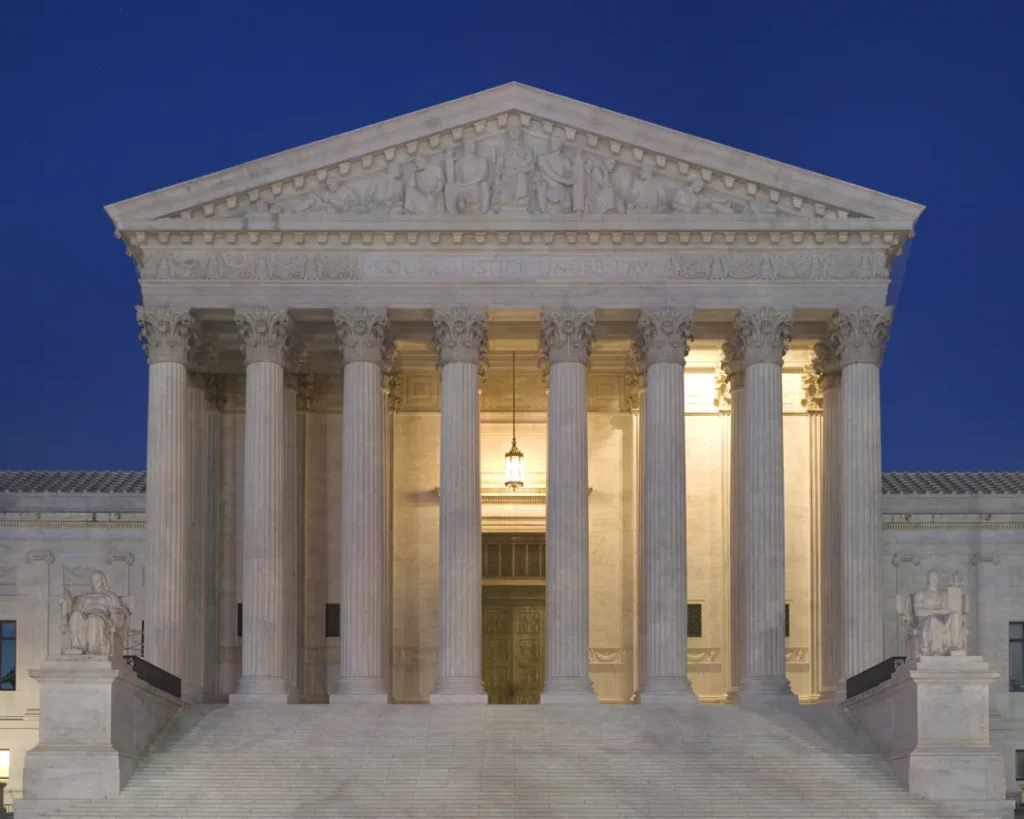
Federal campaign law drew a line between political parties’ independent spending and their spending in coordination with candidates. The Supreme Court held that the federal limit on coordinated party expenditures violates the First Amendment, reversing the Sixth Circuit’s decision applying the Court’s 2001 Colorado Republican precedent.
The challenge concerned 52 U.S.C. § 30116(d), which constrained certain campaign spending by parties using their own funds in coordination with candidates. The law separately treats candidate contributions and independent expenditures. These distinctions matter when reading a broad description of the ruling and assessing which campaign-finance rules remain relevant.
Justice Brett Kavanaugh’s majority opinion reasoned that coordination can serve a core political party function. Parties amplify candidates’ speech and help candidates who carry their message communicate with the public. The majority did not find the particular restriction adequately justified by an interest in preventing evasion of contribution limits, pointing among other things to federal earmarking restrictions that continue to apply.
Justice Elena Kagan dissented, joined by Justices Sonia Sotomayor and Ketanji Brown Jackson. The dissent considered the continued risk of circumventing contribution limits and criticized the majority’s treatment of precedent. The division is about how campaign-finance law can respond to coordination while respecting constitutional protection for political speech.
The June 30 case concerned the particular party expenditure limit. It did not erase the distinction between independent and coordinated spending everywhere in federal election law or eliminate other rules on direct contributions. Identifying who spent the money, which legal mechanism applied, and whether funds were raised or earmarked for a candidate remains important when interpreting campaign activity after the opinion.